Japanese Strawberry Treats: How to Make Perfect Ichigo Daifuku at Home
If you have ever stepped into a traditional confectionery shop in Tokyo or scrolled through an aesthetic food feed, you have likely marveled at the elegance of Japanese strawberry treats. Among these delightful confections, none capture the perfect balance of texture and flavor quite like Ichigo Daifuku. This beloved seasonal treat wraps a juicy, ripe strawberry and a layer of sweet red bean paste inside a pillowy-soft, chewy blanket of mochi. It is a masterpiece of contrast: the vibrant acidity of the fresh fruit cuts beautifully through the rich, earthy sweetness of the bean paste, while the soft mochi skin provides an incredibly satisfying chew.
Recreating these iconic Japanese strawberry treats in your own kitchen might seem intimidating, but it is surprisingly simple and budget-friendly. You do not need specialized bakery equipment or years of pastry training to master this traditional dessert. By using a few accessible ingredients and a straightforward microwave method, you can achieve restaurant-quality results that will delight your family and impress your dinner guests. Whether you are a long-time fan of Japanese cuisine or looking to try a unique baking project, this guide will walk you through every secret to achieving mochi perfection.
Why You’ll Love This Recipe
- Incredible Contrast of Textures: The magic of these Japanese strawberry treats lies in the layers—combining a snap of fresh, juicy berry with smooth paste and a melt-in-your-mouth mochi exterior.
- Surprisingly Quick and Easy: While traditional mochi requires intense pounding, this modern home-cook method uses a microwave to prepare the dough in just a few minutes.
- Naturally Gluten-Free: Made with sweet rice flour, this traditional dessert is naturally gluten-free, making it an excellent treat to share with friends who have dietary restrictions.
- A Gorgeous, Show-Stopping Presentation: When sliced in half, the bright red cross-section of the strawberry surrounded by dark paste and white mochi looks absolutely stunning on any dessert platter.
Ingredients You’ll Need
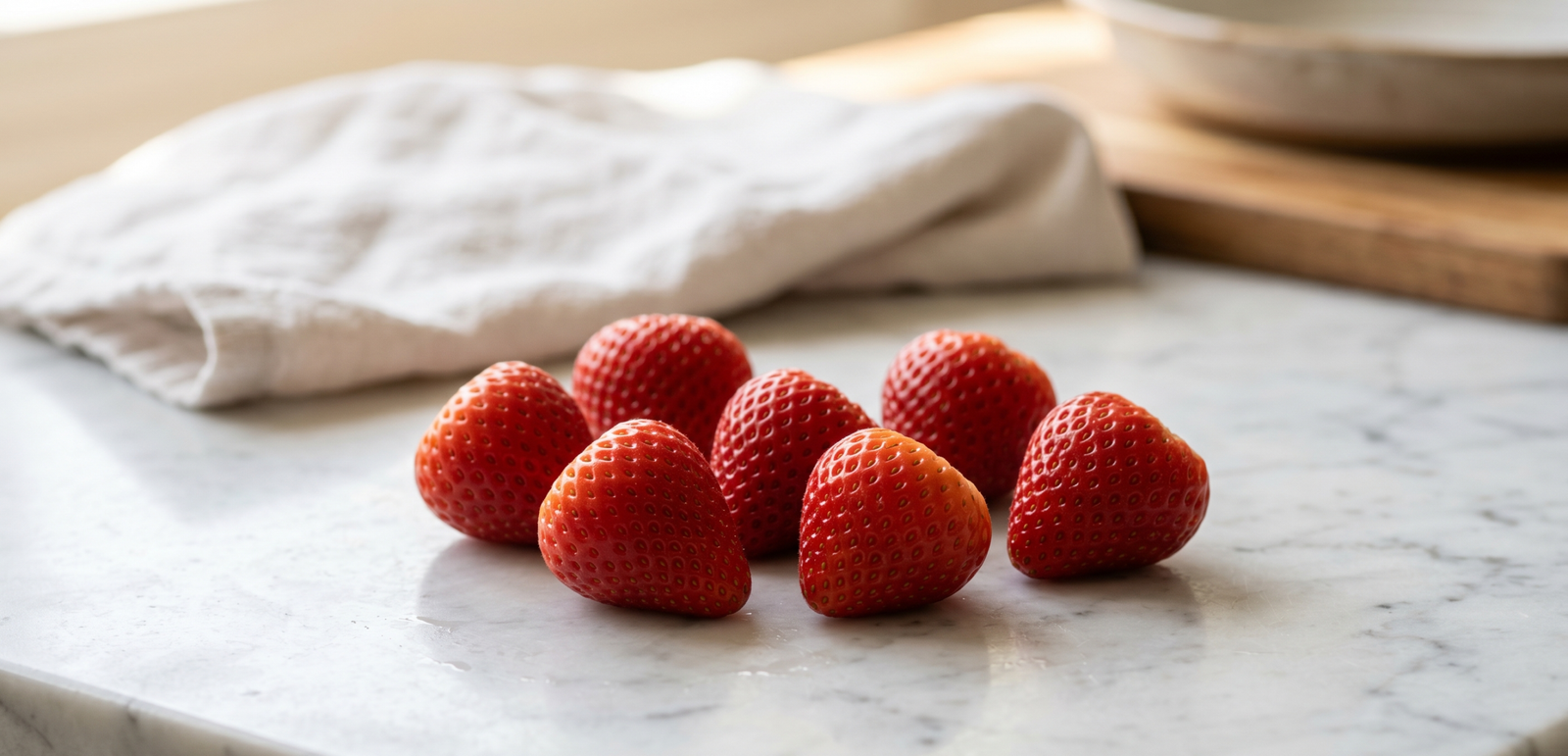
- Fresh Strawberries: 6 medium-sized, ripe but firm strawberries
- Sweet Red Bean Paste (Anko): 1 cup of smooth (Koshian) or chunky (Tsubuan) paste
- Glutinous Rice Flour (Shiratamako or Mochiko): 1 cup
- Granulated Sugar: 1/4 cup
- Water: 3/4 cup
- Potato Starch or Cornstarch: 1/2 cup (for dusting and handling the sticky dough)
Ingredient Notes & Substitutions
Choosing the right components is essential for authentic Japanese strawberry treats. The absolute star of the show is the sweet rice flour. For the most traditional texture, look for Shiratamako, a coarse Japanese glutinous rice flour that dissolves smoothly and creates an exceptionally bouncy, stretchy mochi. If you cannot find it at your local Asian market, Mochiko is a widely available substitute that works beautifully, though it results in a slightly denser chew. Make sure not to use regular white rice flour, as it lacks the necessary stickiness and elasticity.
For the strawberries, opt for medium, uniformly shaped berries. Giant strawberries can be difficult to wrap neatly, while overly soft berries will release too much moisture and make your mochi soggy. When it comes to the red bean paste, smooth Koshian provides a sleek, elegant look, but chunky Tsubuan adds a wonderful rustic texture. If you aren’t a fan of red bean, sweet white bean paste (Shiroan) or even a layer of hazelnut spread or chocolate ganache can make fantastic modern twists.
Step-by-Step Instructions
Step 1: Prep the Strawberries
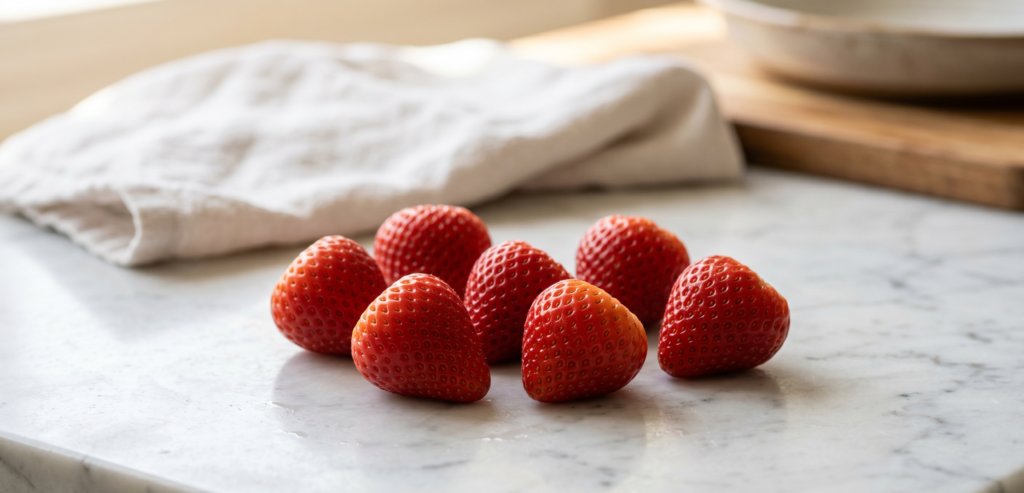
Wash the strawberries thoroughly and dry them completely with a paper towel. Carefully hull the berries by cutting off the green leafy tops in a flat line so they can stand upright.
Step 2: Wrap the Strawberries in Bean Paste
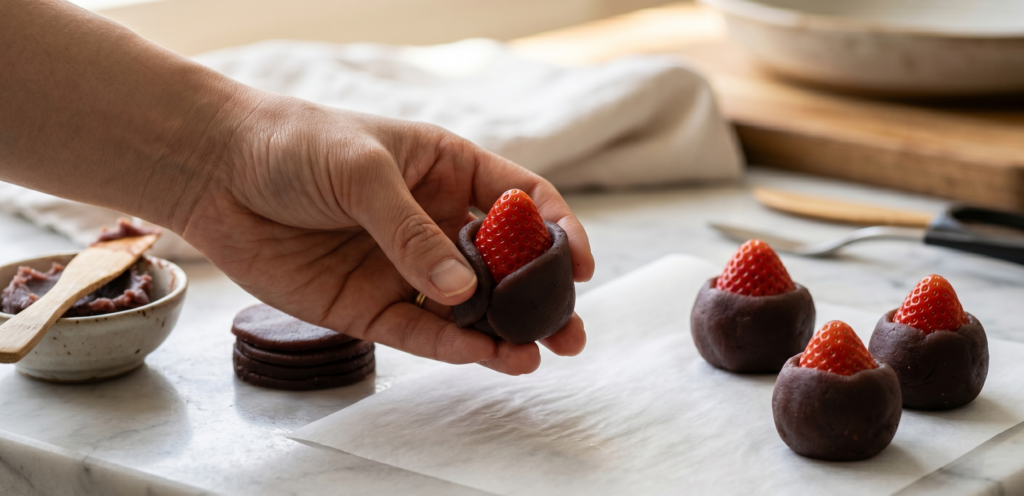
Divide your red bean paste into 6 equal portions. Roll each portion into a ball, flatten it into a small disc, and wrap it around a strawberry, leaving the very tip of the berry exposed to guide your shaping later.
Step 3: Mix and Cook the Mochi Dough
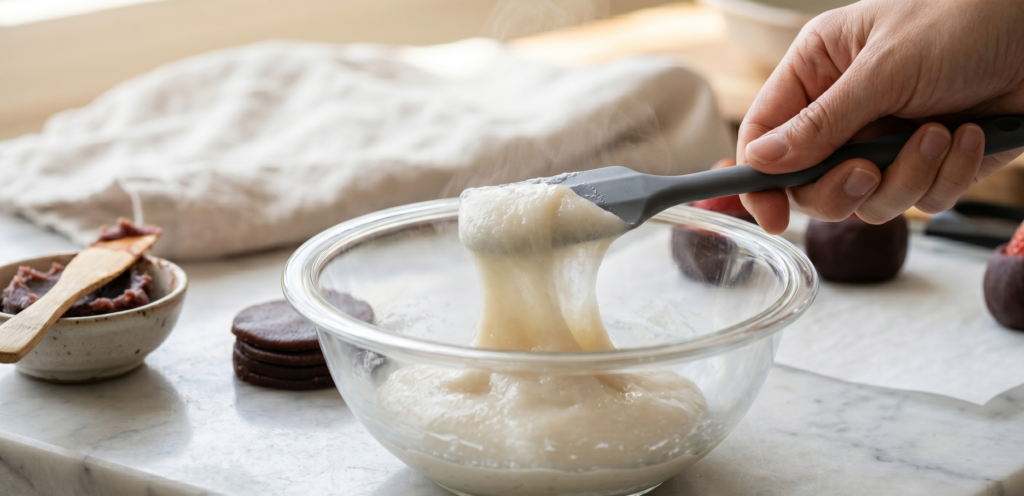
In a microwave-safe glass bowl, whisk together the glutinous rice flour, sugar, and water until completely smooth. Cover the bowl loosely with plastic wrap and microwave on high for 1 minute. Remove, stir vigorously with a wet spatula, cover again, and microwave for another 1 minute until the dough expands and becomes translucent and sticky.
Step 4: Dust and Divide the Dough
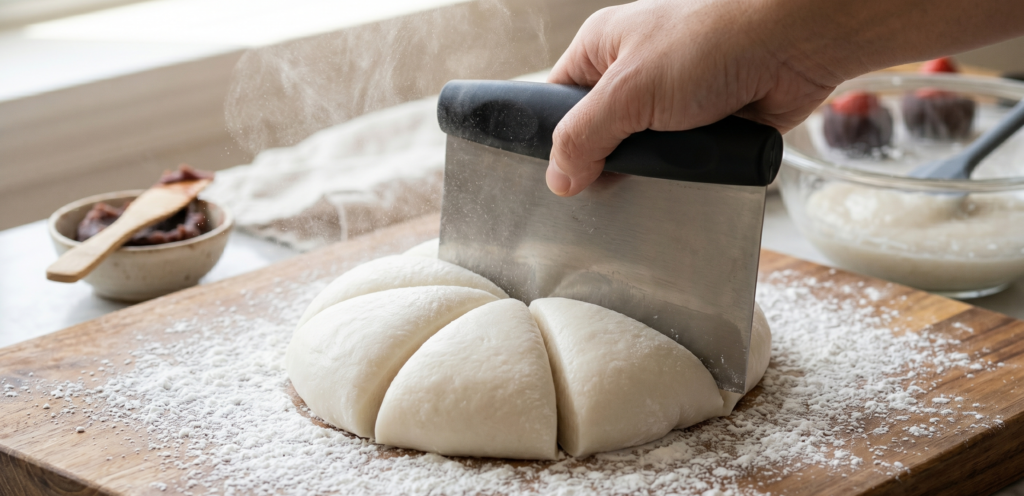
Generously dust a clean cutting board or work surface with potato starch. Turn the hot mochi dough out onto the starch and dust the top of the dough as well. Using a starch-coated knife or scraper, divide the dough into 6 equal pieces.
Step 5: Wrap and Seal the Confections
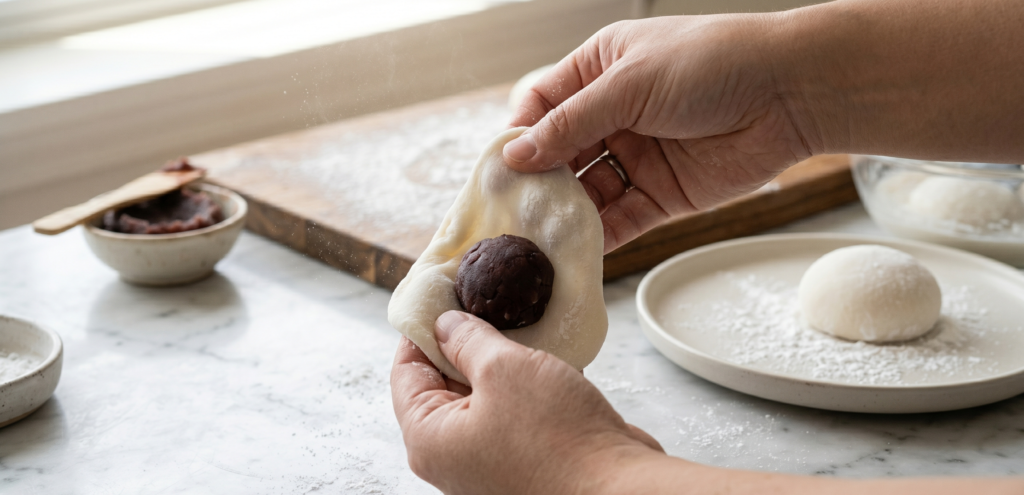
Take one piece of mochi dough and flatten it into a circle, making the edges slightly thinner than the center. Place a bean-paste-covered strawberry in the center (tip facing down), pull the edges of the mochi up over the base, and pinch the seams tightly together to seal. Roll gently in your hands to form a smooth ball.
Tips for Perfect Results
- Starch Is Your Best Friend: Mochi dough is incredibly sticky. Keep your hands, tools, and work surfaces well-coated with potato starch or cornstarch to prevent tearing and frustration.
- Keep the Mochi Warm: Wrap the strawberries while the mochi dough is still warm to the touch. As the dough cools down completely, it loses its elasticity and becomes much harder to stretch and seal seamlessly.
- Dry Your Fruit Completely: Any trapped moisture between the strawberry and the bean paste will cause the layers to slip and turn the dessert soggy over time.
Recipe Variations
- Matcha Mochi Skin: Add one teaspoon of high-quality culinary matcha powder to your rice flour and sugar mixture before adding water to create beautiful, vibrant green Japanese strawberry treats with an earthy flavor notes.
- White Chocolate & Strawberry: Substitute the traditional red bean paste with a thick, chilled white chocolate ganache for a creamy, modern fusion dessert.
- The Sando Twist: If you run out of rice flour, you can create another staple of Japanese strawberry treats: the Strawberry Sando. Simply sandwich fresh strawberries and sweet whipped cream between two slices of fluffy, crustless Japanese milk bread (Shokupan).
What to Serve With It
These delicate Japanese strawberry treats pair beautifully with bitter or earthy beverages that contrast with their sweetness. A hot cup of traditional Uji Matcha or a steaming mug of toasted Hojicha (Japanese roasted green tea) provides the ultimate authentic tea-house experience. If you prefer cold drinks, an iced jasmine tea or a crisp sparkling water with a twist of yuzu serves as a refreshing palate cleanser between bites.
Storage & Reheating
Authentic Japanese strawberry treats are best enjoyed the absolute day they are made, as the fresh fruit will continuously release moisture. If you have leftovers, store them in an airtight container at room temperature for up to 24 hours.
Avoid storing mochi in the refrigerator if possible, as the cold temperature causes the rice starch to recrystallize, turning your soft, pillowy treat hard and unpleasantly chewy. If you must refrigerate them to keep the fruit fresh in hot weather, wrap each daifuku tightly in plastic wrap and let them sit at room temperature for 15 to 20 minutes to soften before serving.
Common Mistakes to Avoid
- Using Regular Rice Flour: Substituting glutinous rice flour with standard white or brown rice flour will result in a grainy, watery paste that won’t hold its shape or stretch.
- Over-cooking the Mochi: If you microwave the dough for too long, it will lose its moisture, turning tough, rubbery, and impossible to wrap around the delicate fruit.
- Wrapping Giant Berries: Selecting massive strawberries makes it incredibly difficult to stretch the dough completely over the fruit without it thinning out and tearing.
Frequently Asked Questions (FAQs)
Can I freeze Ichigo Daifuku?
It is not recommended to freeze these specific Japanese strawberry treats. While plain mochi dough freezes beautifully, whole fresh strawberries become mushy, watery, and completely lose their structure once thawed, ruining the texture of the dessert.
What is the difference between Shiratamako and Mochiko?
Both are made from glutinous rice, but they are processed differently. Shiratamako is made using a wet-milling process that preserves the starch structure, yielding a smoother, extra-stretchy, and bouncy texture. Mochiko is dry-milled into a fine powder, resulting in a slightly denser and less elastic mochi skin.
Can I make this recipe sugar-free?
Sugar is crucial not just for flavor, but also for keeping the mochi dough soft, pliable, and hydrated. Reducing or replacing the sugar entirely with alternative sweeteners can cause the mochi skin to dry out quickly and turn hard within an hour of cooking.
Why is my mochi dough tearing when I wrap it?
Tearing usually happens if the dough was rolled out too thin, or if it cooled down too much before you finished wrapping. Keep your unused dough portions covered under a warm, damp cloth while you work on each piece to preserve their elasticity.
Final Thoughts
Mastering traditional Japanese strawberry treats at home is a deeply rewarding culinary experience that proves you don’t need fancy bakery equipment to create elegant sweets. With just a microwave, a package of sweet rice flour, and a basket of fresh berries, you can experience the magical texture contrast of perfect Ichigo Daifuku right in your kitchen. Gather your ingredients, dust your counters generously with starch, and enjoy the process of making this beautiful, budget-friendly dessert!